A high-profile beach club in Canggu recently faced a massive administrative lawsuit and a Rp400 million fine, not for mistreating their staff, but for a procedural lapse. They had failed to update their Foreign Worker Utilization Plan after a minor change in an expat director’s job description. Simultaneously, they faced an Industrial Relations Court (PHI) claim from a local manager who was dismissed without the mandatory 14-day notice period required under the latest updates to the Omnibus Law. In Bali’s post-2025 regulatory environment, labor compliance is no longer a “back-office” task; it is a front-line commercial risk.
Hiring Dynamics: Local vs. Foreign Compliance
The bedrock of employment in Indonesia is Law Number 13 of 2003 concerning Manpower, as significantly amended by Law Number 6 of 2023 concerning Job Creation (hereinafter referred to as the Omnibus Law).
For local staff, businesses must choose between a Fixed-Term Employment Contract (PKWT) and an Indefinite-Term Employment Contract (PKWTT). A common 2026 pitfall in Bali’s hospitality sector is the “Permanent-by-Error” trap: if a PKWT exceeds the 5-year maximum total duration or fails to be registered with the local Manpower Office (Disnaker), the employee is legally deemed permanent, triggering higher severance liabilities.
For foreign staff, the requirements are even more stringent. Employers must secure an approved Foreign Worker Utilization Plan (hereinafter referred to as the RPTKA), which acts as the legal basis for work permits. Under Government Regulation Number 34 of 2021 concerning the Use of Foreign Workers (hereinafter referred to as the TKA Regulation), companies are strictly prohibited from hiring foreigners for HR or personnel management roles and must appoint a local “companion” worker for knowledge transfer.
The Termination Trap: Due Process in 2026
Terminating staff in Bali is often perceived as difficult, but it is actually a matter of strict procedural adherence. Under the Omnibus Law, “at-will” employment does not exist. Every dismissal must be backed by a valid legal reason such as efficiency, restructuring, or repeated misconduct and must follow the 14-business-day written notice rule.
If an employee rejects the termination notice, the company must enter a mandatory bipartite negotiation. Skipping this step or failing to document it correctly will lead the case to the local Manpower Office for mediation and potentially the Industrial Relations Court, where the company often loses on procedural grounds regardless of the employee’s performance issues.
Strategic Expert Opinion: The Legalinfo Perspective
A company’s greatest liability in Bali is often its own internal “Company Regulations” (PP) if they haven’t been harmonized with recent 2026 circular letters.
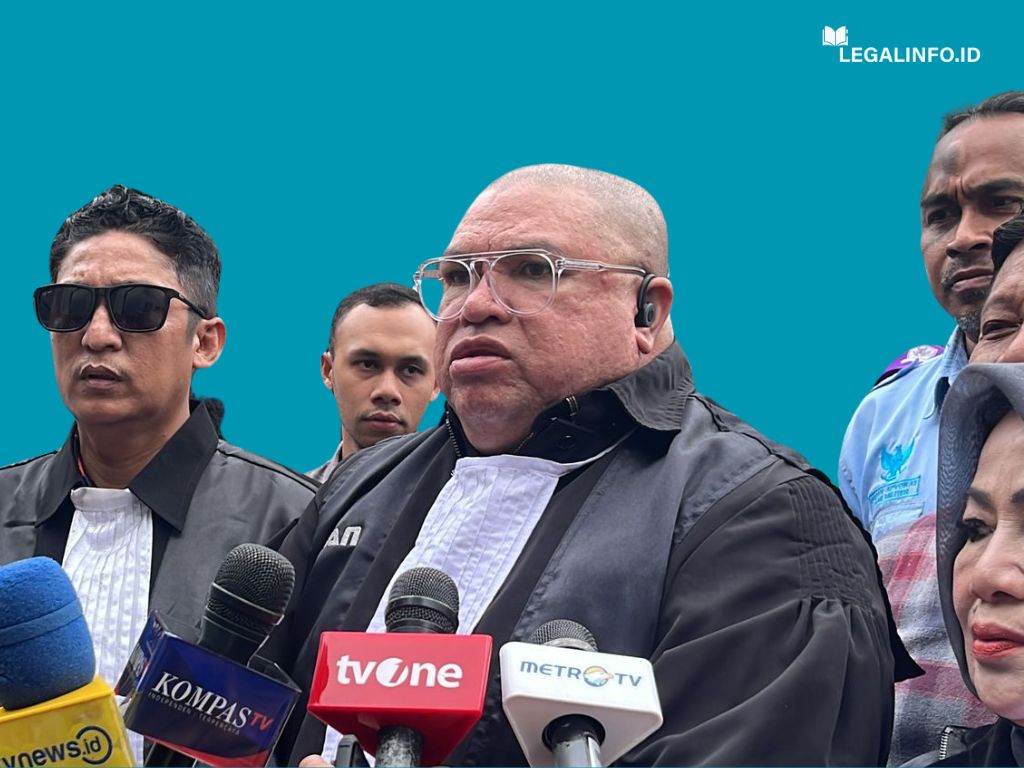
According to Gunawan Sembiring, S.H., Managing Partner Legalinfo Lawyers, many PMA companies in Bali are still using employment templates from five years ago that don’t reflect the new 2026 SE No. 3/836/PK.04/I/2026 requirements for digital TKA data transparency. He emphasizes that the “Restorative Justice” approach also applies to labor: settling a dispute via a Mutual Termination Agreement (PBB) is always more cost-effective than a three-tier court battle. However, he warns that the calculation of severance pay (Pesangon) must be precise to the decimal point to avoid “bad faith” claims during mediation.
Step-by-Step Checklist for Lawful Management
To maintain a “Good Standing” status in 2026, Bali businesses should implement the following:
-
Contract Harmonization: Ensure all PKWT and PKWTT contracts are bilingual (Indonesian and English) and clearly define “Gross Misconduct” to allow for zero-severance termination in extreme cases.
-
RPTKA Audit: Verify that your current RPTKA exactly matches the physical location and duties of your foreign staff. In 2026, discrepancies between the system and reality trigger immediate KITAS revocations.
-
Severance Provisioning: Always calculate the “1x, 0.5x, or 0.75x” multipliers for severance pay based on the specific reason for termination as dictated by the Omnibus Law implementing regulations.
-
The 14-Day Notice Rule: Never terminate an employee on the spot. Provide a formal written notice setting out the reasons, the rights to be paid, and the 7-day window for the employee to respond.
-
Compensation for FTC: Remember that under the current TKA Regulation, local staff on fixed-term contracts are entitled to a “Compensation Pay” at the end of their term (pro-rated based on months of service), a rule that does not apply to foreign workers but is often misapplied.
Conclusion
Managing a workforce in Bali requires a deep understanding of the intersection between the Omnibus Law and local Disnaker practices. Whether you are scaling a boutique hotel or a tech startup, the cost of a labor dispute far outweighs the cost of proactive legal structuring. In 2026, the businesses that thrive are those that view labor law not as a constraint, but as a framework for operational stability.