Facing a legal dispute or litigation in Indonesia as a foreign individual or company can be a daunting experience. The legal landscape, procedures, and language are often unfamiliar. A primary source of this uncertainty is not knowing the environment: how Indonesian courts work.
Understanding the basic structure of the Indonesian court system is the essential first step in navigating your legal challenges and formulating a successful strategy.
This guide from Legalinfo Lawyers will provide a clear and simple overview of the judicial hierarchy in Indonesia, including the crucial difference between the General Courts and the specialized Commercial Courts.
A Quick Note: Indonesia’s Civil Law System
First, it’s important to know that Indonesia operates under a Civil Law system. This is different from the Common Law system found in countries like the UnitedS, the UK, or Australia.
In a Civil Law system, the law is primarily found in codified statutes (known as Undang-Undang). While judges may refer to past decisions, they are not strictly bound by precedent as they are in Common Law. This makes a deep understanding of the written statutes and regulations paramount.
The Three Tiers of Indonesia’s Judiciary
The Indonesian judicial system is generally structured into three tiers of “General Courts” (Peradilan Umum) for most civil and criminal matters.
1. Tier One: The District Court (Pengadilan Negeri)
This is the court of first instance. Almost all civil and criminal disputes begin their journey here.
Function: The District Court is where the trial is held, evidence is presented, witnesses are heard, and an initial judgment is rendered.
Location: Every city (Kota) and regency (Kabupaten) in Indonesia has its own District Court.
Jurisdiction: The “relative competence” (jurisdiction) is typically determined by the defendant’s place of residence or the location of the disputed asset.
For you: If you are suing someone or being sued in a standard civil matter (like a breach of contract or an unlawful act), your case will be filed and heard at a District Court.
2. Tier Two: The High Court (Pengadilan Tinggi)
If either party is dissatisfied with the verdict from the District Court, they can file an appeal to the High Court.
Function: The High Court acts as an appellate court. It does not typically re-hear witnesses or conduct a new trial. Instead, it reviews the case based on the documents, evidence, and legal arguments submitted during the initial trial at the District Court.
Location: High Courts are located in each provincial capital.
For you: This is the first level of appeal. The High Court will either uphold the District Court’s decision, overturn it, or (in some cases) order a re-trial.
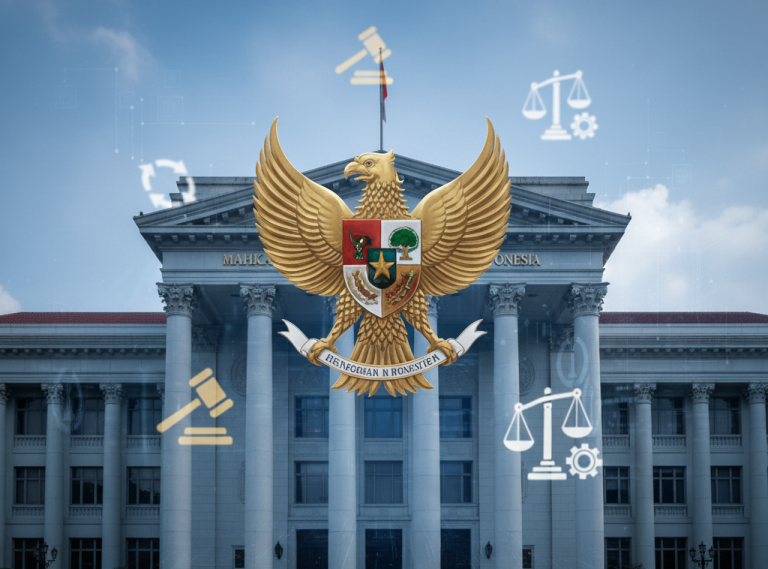
3. Tier Three: The Supreme Court (Mahkamah Agung)
This is the highest court in Indonesia and the final court of appeal. This appeal stage is known as Kasasi (Cassation).
Function: The Supreme Court’s review is generally limited to the application of law, not the facts of the case. It examines whether the lower courts (District and High Court) correctly applied Indonesian law.
Finality: A decision from the Supreme Court is final and binding.
Extraordinary Measure: In very limited and specific circumstances (e.g., discovery of new evidence that was not available before, or clear contradiction in the judgment), a party may request a “Civil Review” (Peninjauan Kembali or PK).
The Crucial Difference: The Commercial Court (Pengadilan Niaga)
This is where the Indonesian court system can be confusing for foreigners, but it is vital for businesses and investors to understand.
The Commercial Court is not a separate tier. Instead, it is a specialized chamber located within certain designated District Courts (e.g., Central Jakarta, Surabaya, Semarang, Medan, and Makassar).
This court was established to handle complex business disputes that require special expertise and, most importantly, speed.
The Commercial Court has exclusive jurisdiction over specific matters, including:
Bankruptcy and PKPU (Suspension of Debt Payment Obligations)
Intellectual Property Disputes (Trademarks, Patents, Copyrights, etc.)
Disputes related to Finance and Banking (in some specific contexts)
Disputes related to the Indonesian Stock Exchange
Cases in the Commercial Court operate on a much faster, fixed timeline (e.g., a PKPU case is typically decided in a matter of weeks, not years). The judges presiding are specialist judges with expertise in these commercial areas.
How Legalinfo Lawyers Can Help
Navigating this system requires experienced local counsel who understands both the written law and the practical realities of the courtroom. Attempting to manage litigation in Indonesia without a trusted guide can lead to critical missteps.
At Legalinfo Lawyers, we specialize in representing foreign clients in the Indonesian courts. Whether you are facing a complex intellectual property dispute in the Commercial Court or a breach of contract claim in the District Court, our team is ready to protect your rights and interests.